

Quick answer
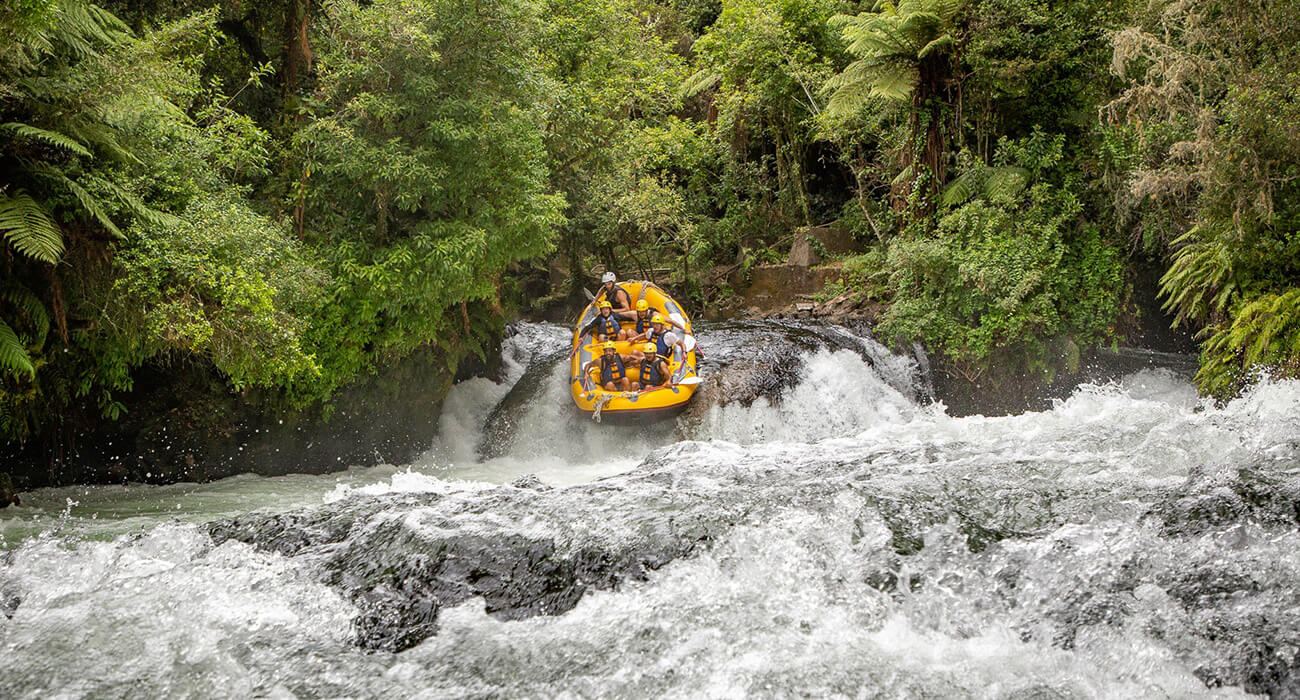
White water rafting in Rotorua on the Kaituna River is graded as Grade 5, the highest classification for commercial rafting in New Zealand. The river includes fourteen rapids and the 7-metre Tutea Falls, which alone carries the Grade 5 rating. Most of the river sits at Grade 3 to 4, but the presence of Tutea Falls lifts the overall trip classification to Grade 5, requiring participants to be at least 13 years old and reasonably fit.
The Kaituna River holds the only Grade 5 rapid available to the public without prior rafting experience in New Zealand, and that rapid is a waterfall. Tutea Falls drops seven metres in a near-vertical plunge, and every commercial trip on the full Kaituna descent goes over it. The international grading system runs from 1 to 6, where Grade 1 is moving water with small waves and Grade 6 is considered unrunnable. Grade 5 sits at the upper edge of what commercial operators will take first-time rafters through, defined by long, violent rapids with unavoidable waves, drops, and complex routes that demand precise manoeuvring. What grade is white water rafting in Rotorua depends on which section of the river you choose. The full 14-kilometre Kaituna descent carries the Grade 5 classification because of Tutea Falls, but the majority of the rapids upstream sit at Grade 3, which involves moderate, irregular waves and requires some manoeuvring but remains forgiving for novices. A handful of rapids push into Grade 4 territory, where the waves grow larger and the consequences of a mistake become more serious. Operators offer a shorter family-friendly option on the Kaituna's lower section, avoiding Tutea Falls entirely and keeping the experience within Grade 2 to 3 range, suitable for children as young as five. The Okere Falls outlet at the river's end channels the Kaituna through a narrow basalt gorge, and the gradient steepens considerably in the final two kilometres. Rapids in this section arrive in quick succession with limited recovery pools between them, and the water temperature holds steady at 11 to 13 degrees Celsius year-round due to the river's geothermal source. The grade reflects both the technical difficulty of the rapids and the consequences of a swim, and on the Kaituna those consequences include cold water, continuous rapids, and limited exit points once you enter the gorge. Rotorua's rafting grade sits higher than most commercial rivers in New Zealand, where the majority of beginner trips run at Grade 2 to 3. The Kaituna's Grade 5 classification makes it a drawcard for rafters seeking a high-adrenaline experience without needing prior experience, though operators screen for swimming ability and enforce age and fitness minimums more strictly than on lower-grade rivers.
“The Kaituna River holds the only Grade 5 rapid available to the public without prior rafting experience in New Zealand, and that rapid is a waterfall.”
Check availability
Frequently asked questions about what grade is white water rafting in rotorua
Everything you need to know about what grade is white water rafting in rotorua